
Juvenile biographies of Abraham Lincoln are part of a long tradition of children’s books designed to shape the moral character of their readers. With an eye towards molding children’s ideals early and often, such narratives typically emphasize the hard-won successes of humility, truthfulness, prudence and exertion, often through the life of a historical figure deemed worthy of emulation. Notably, one book that exemplifies this genre, Weems’ The life of George Washington (item 1), figures prominently in the mythology surrounding young Abraham Lincoln. As the popular story goes, the teenage Lincoln borrowed The life of George Washington from a neighbor in Indiana and, after the book was damaged in a rainstorm, labored for two weeks to pay off the cost. Recounted in many of the Lincoln biographies on display here, this incident is treated as evidence of Lincoln’s integrity, honesty and industriousness, qualities common to historical role models in juvenile literature.
Table of contents:
- Weems, M.L. (Mason Locke). The life of George Washington: with curious anecdotes, equally honourable to himself, and exemplary to his young countrymen...; embellished with six engravings. Philadelphia: Published by Joseph Allen, 1847.
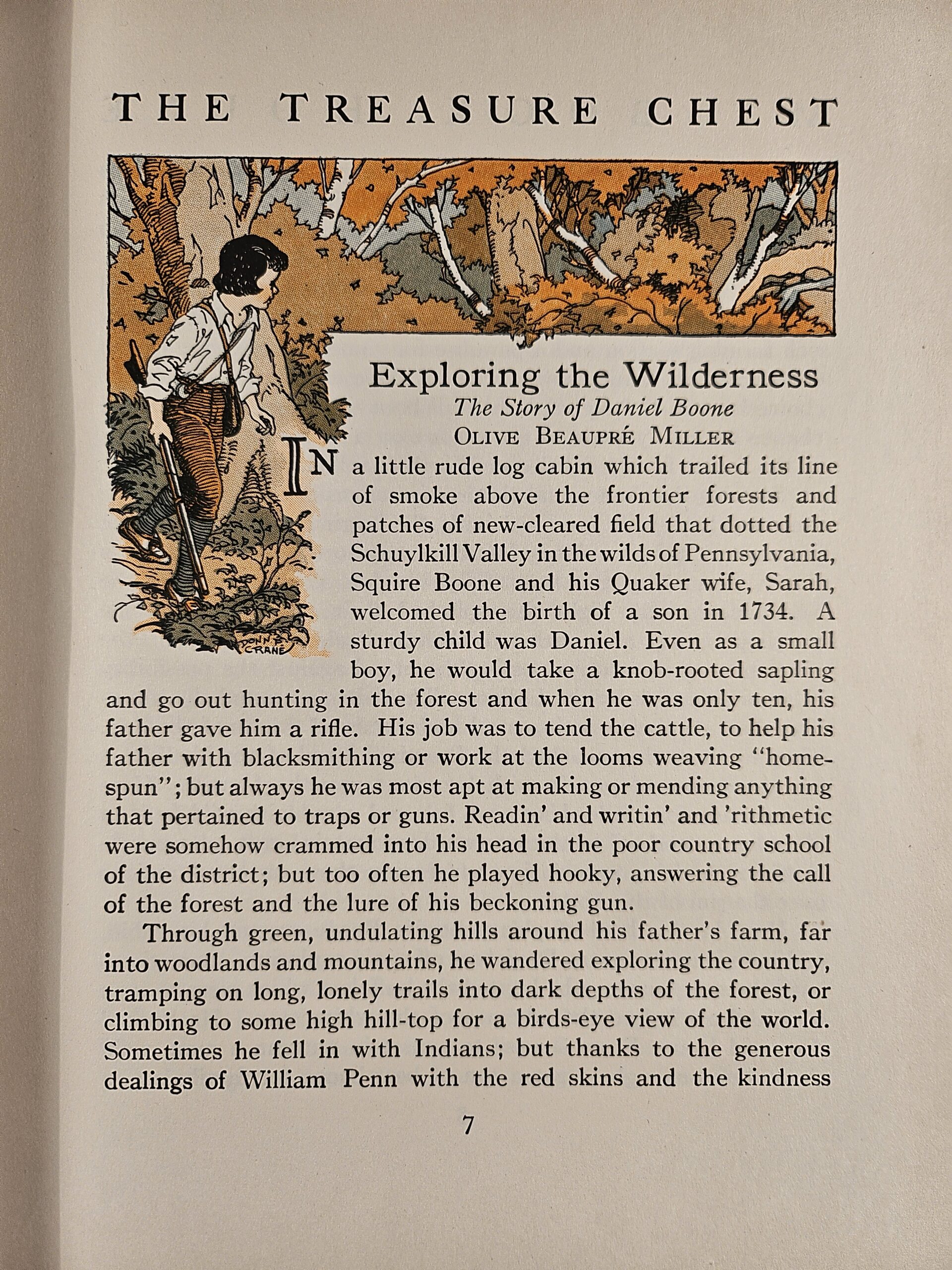
- Miller, Olive Beaupré. The Treasure chest of my book house. Chicago: Book House for Children, 1950.
- Hawthorne, Nathaniel, author; Billings, Hammatt, illustrator. True stories from history and biography. Boston: Ticknor, Reed, and Fields, 1851.
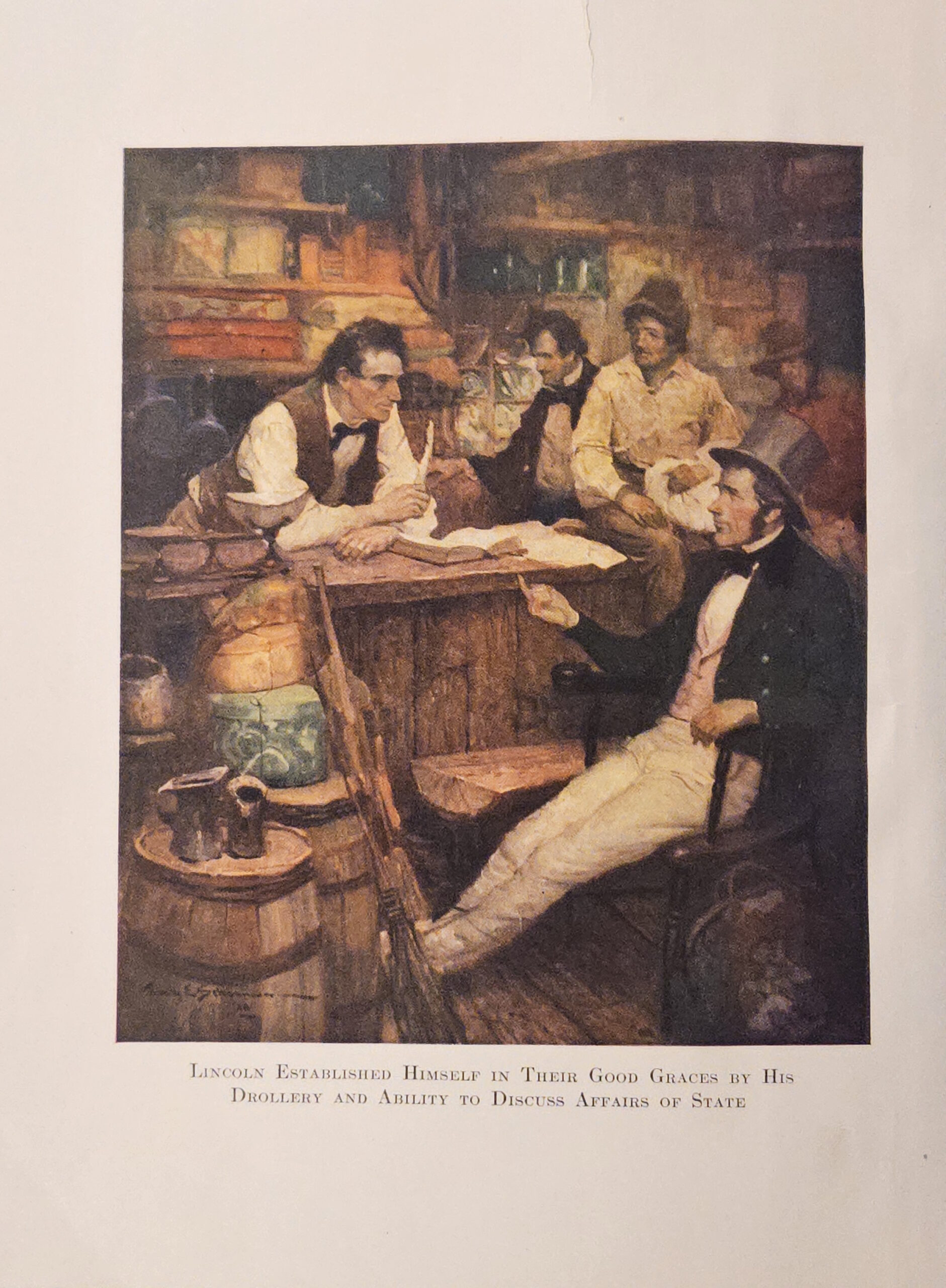
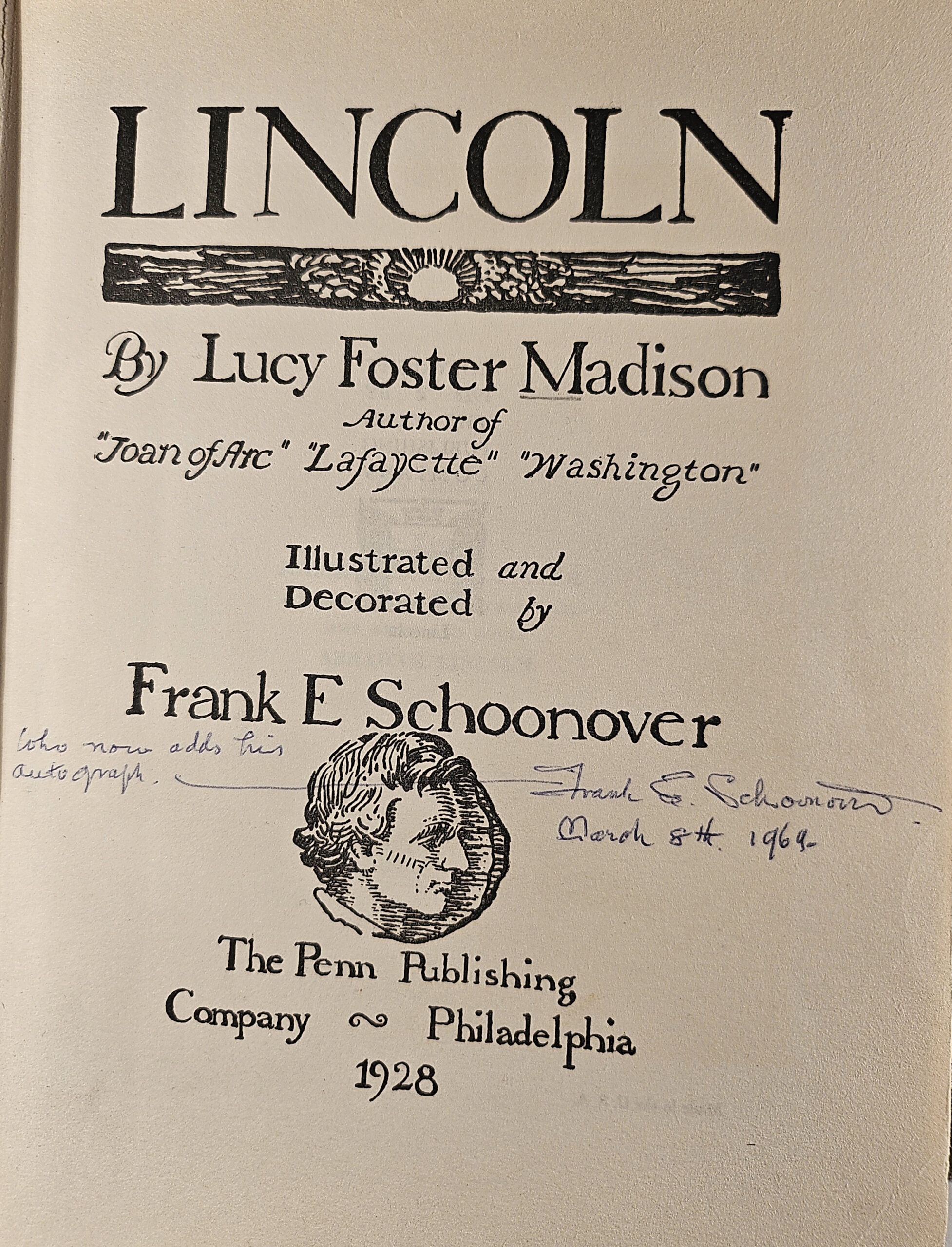
- Madison, Lucy Foster, author; Schoonover, Frank, illustrator. Lincoln. New York: Hampton, 1928.
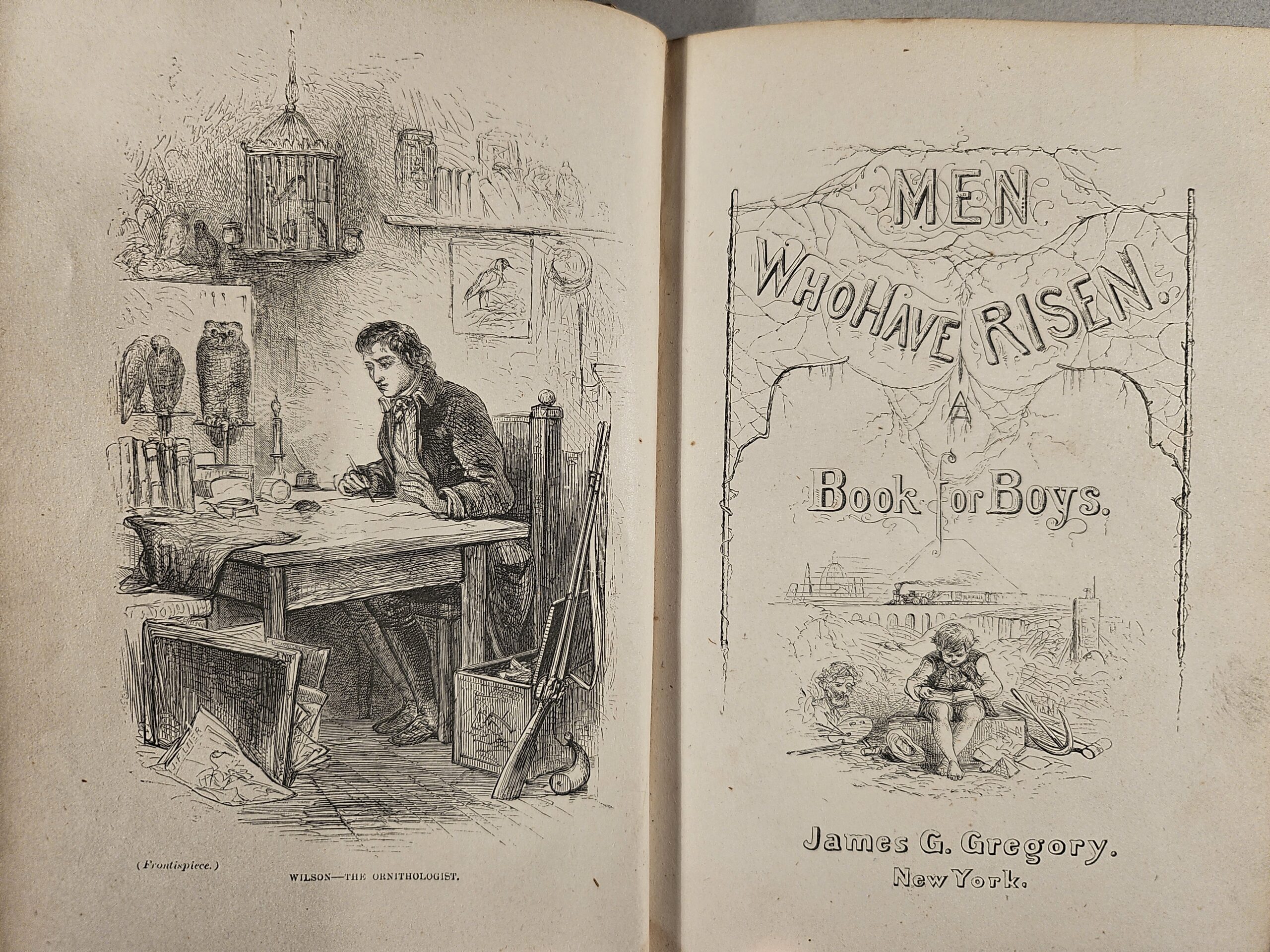
- Doyle, C.A. and Hogg, James. Men who have risen: a book for boys. New York: James G. Gregory, 1859.
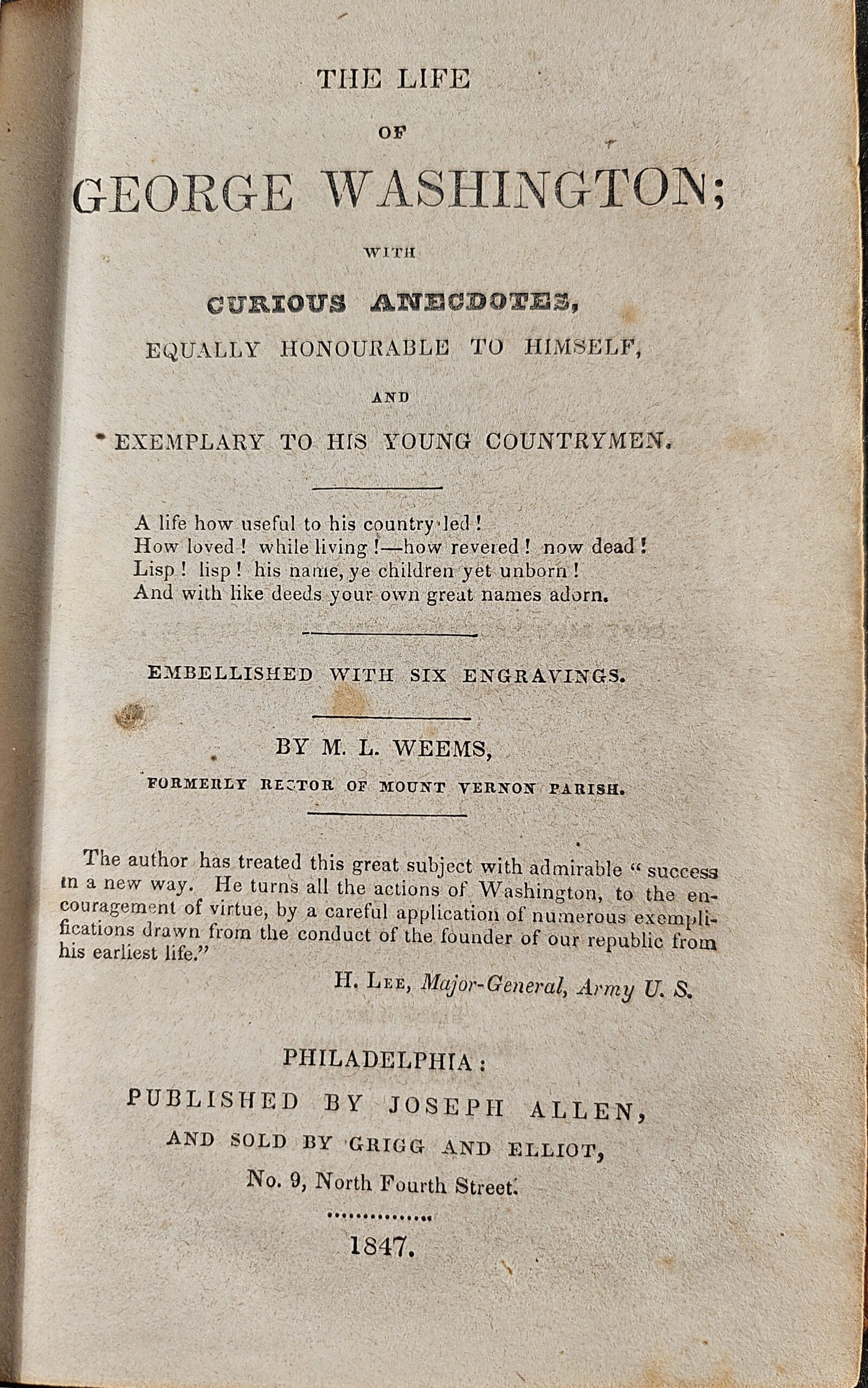
Mason Locke Weems is not only the author of the book so monumental to folklore about Abraham Lincoln, but likely the originator of much folklore about George Washington as well. Life of Washington features the famous line, "I can't tell a lie, Pa; you know I can't tell a lie," referring the myth of Washington cutting down his father's cherry tree.
The inner page features a poem that embodies the lessons that prominent figures impart to children:
"A life how useful to his country led!
How loved! while living! - how revered! now dead!
Lisp! lisp! his name, ye children yet unborn!
And with like deed your own great names adorn."
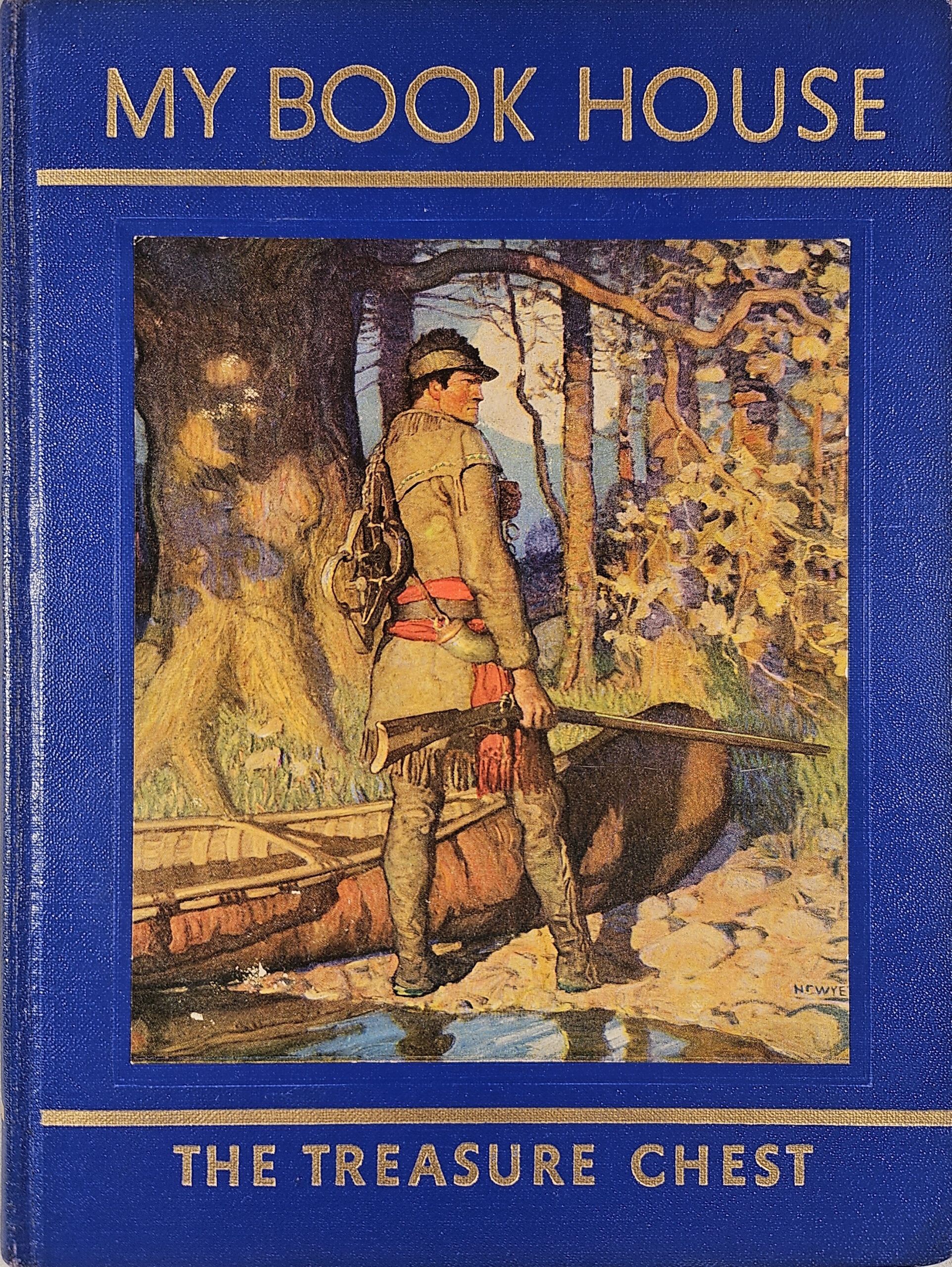
Also known as My Book House: The Treasure Chest, this is the ninth volume in a series of twelve books published by owner and editor Olive Beaupré Miller. Beaupré Miller formed her own company, "The Book House for Children," in 1919 to focus on writing stories for children that would educate them in matters of both skills and morals throughout the various stages of childhood.
Beaupré Miller opens The Treasure Chest with the story of Daniel Boone, a friend of President Lincoln's grandfather and a folk hero of his own. The text describes Boone's birth in a manner similar to Lincoln's: born on the frontier, housed in a small cabin, with the chimney smoke lining the sky.
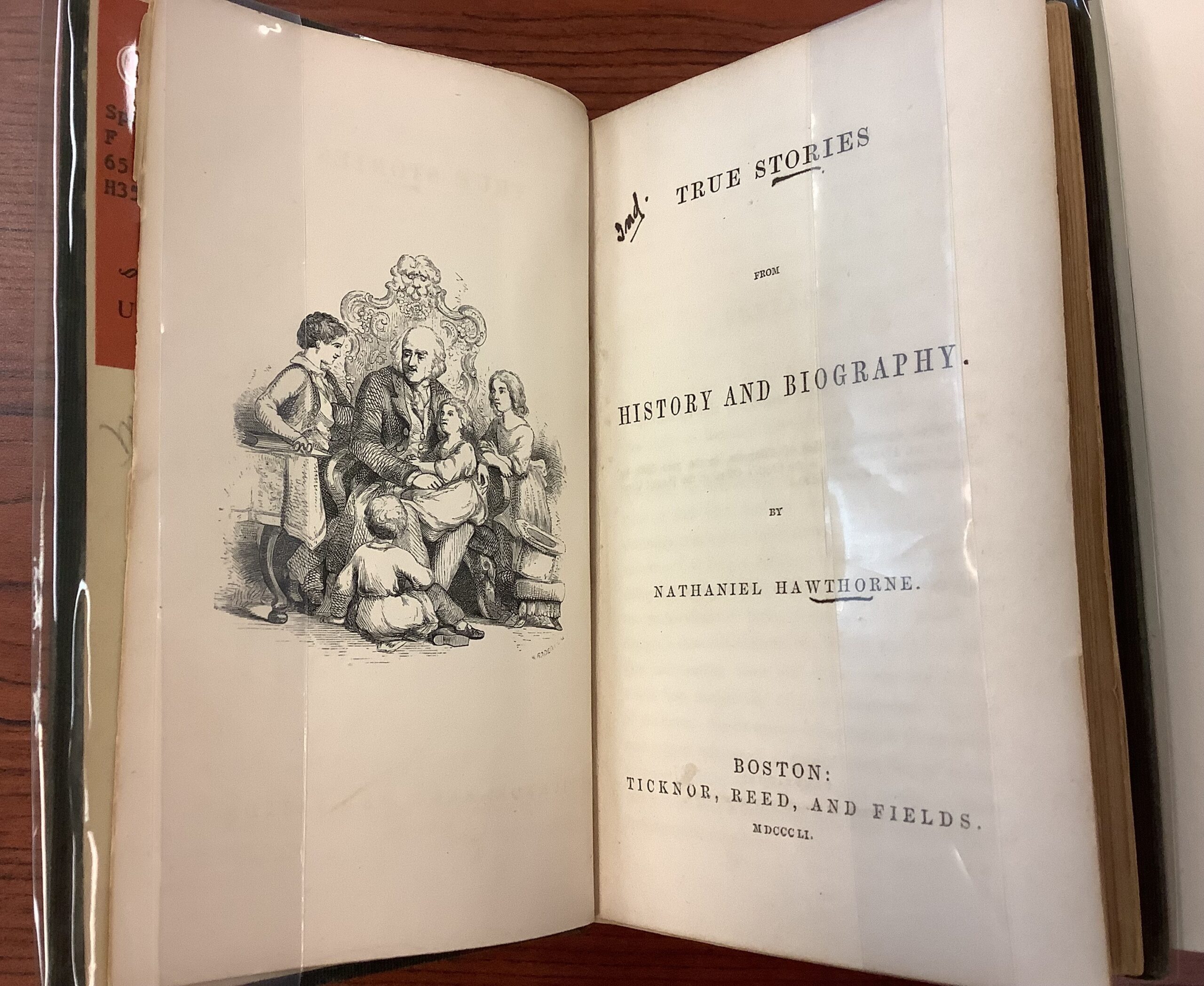
Nathaniel Hawthorne, famous for such works as The Scarlet Letter and The House of the Seven Gables, also writes of the importance of providing children with heroes to admire through stories that can entertain. A quote from Hawthorne shows how these historical accounts become folk tales:
"The author, it is true, has sometimes assumed the license of filling up the outline of history with details for which he has none but imaginative authority, but which, he hopes, do not violate nor give a false coloring to the truth."
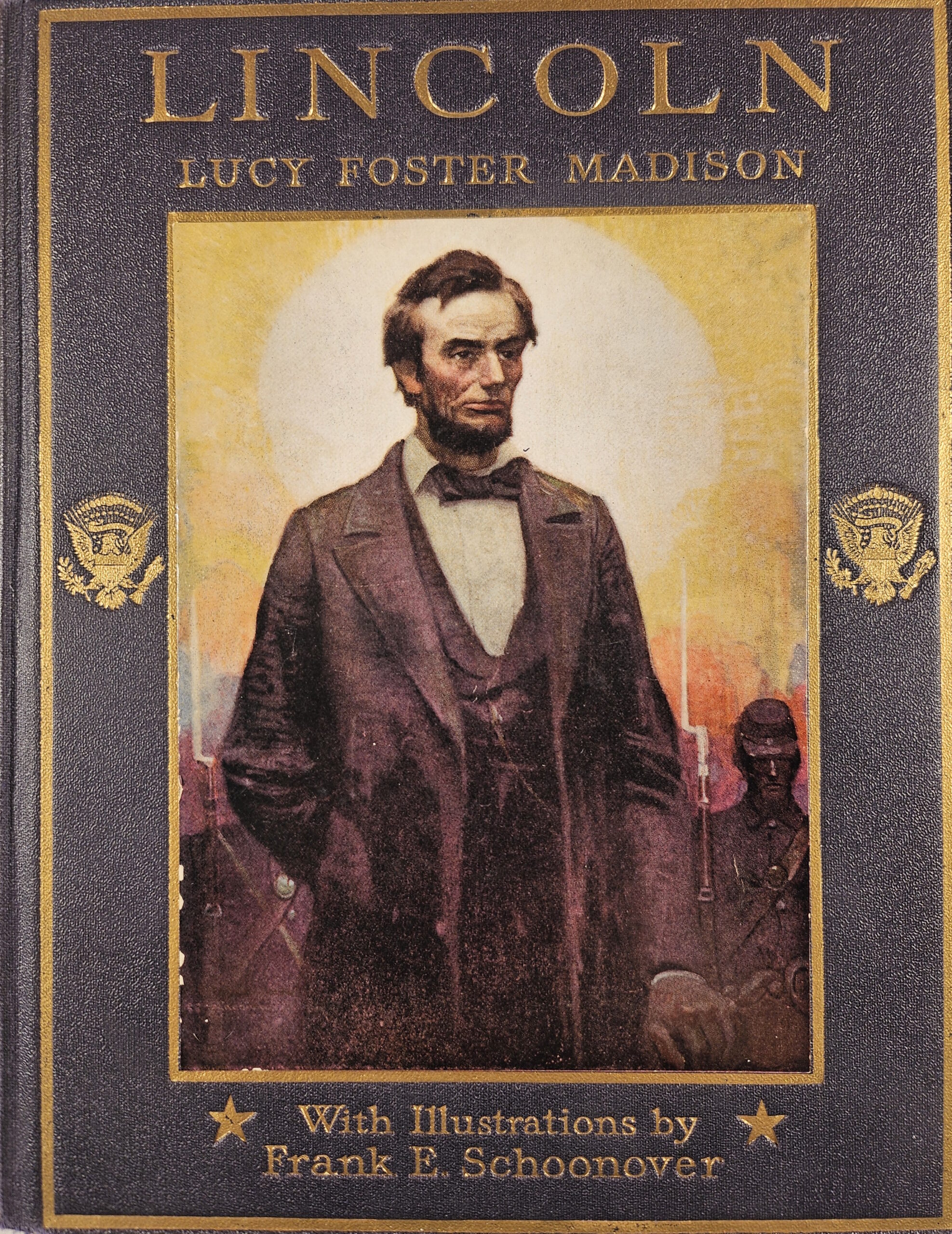
In addition to this work about Abraham Lincoln, Lucy Foster Madison authored many juvenile biographies of historical folk heroes, including Joan of Arc, the Marquis de Lafayette, and George Washington.
The humble pioneer has been a popular folk hero trope presented as worthy of emulation for some time. In Men who have risen: a book for boys, author James Hogg notably writes of George Stephenson, another pioneer born in a cottage "of the humblest class, with unplastered walls, clay floor, and exposed rafters."