
When the call to action sounds, ordinary people are capable of extraordinary deeds. These objects serve as material witnesses to the struggles and hopes shared by those who stood and demanded change.
NAACP Baseball Cap, circa 1980s
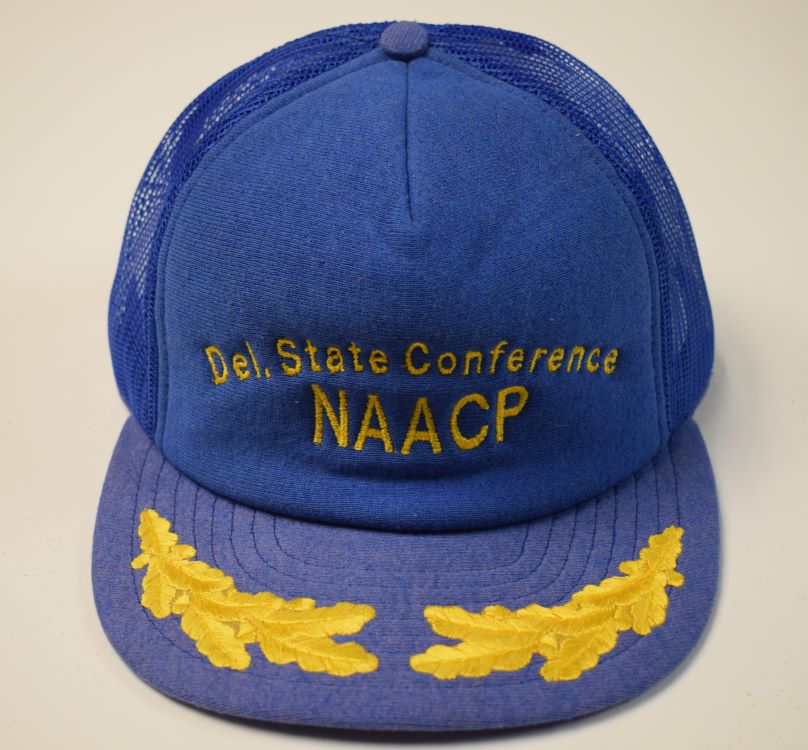
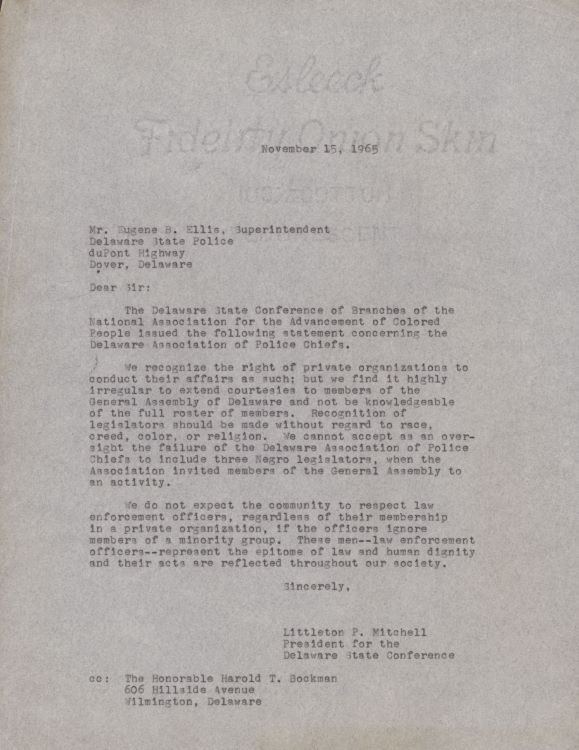
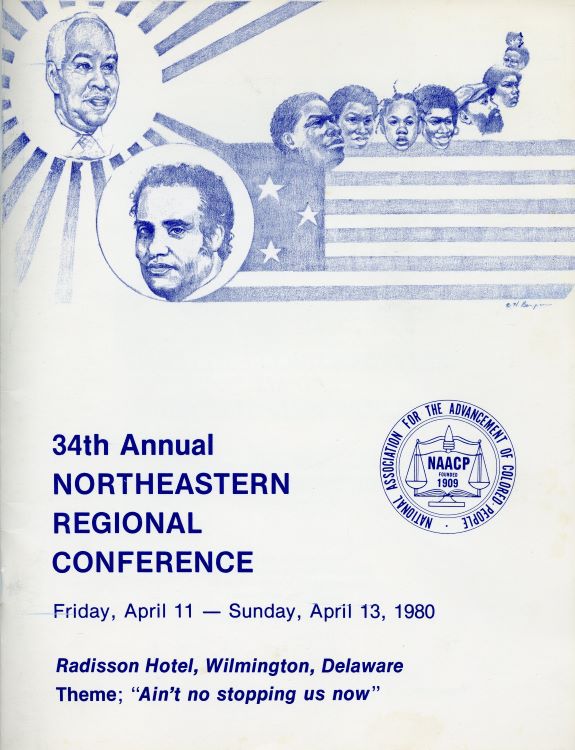
This NAACP baseball cap, part of the Littleton and Jane Mitchell papers, is a vintage souvenir from a Delaware NAACP Conference that symbolizes the couple’s work to secure equal rights for African American Delawareans. Littleton Mitchell (1918-2004) was a WWII veteran and member of the esteemed Tuskegee Airmen unit, as well as a teacher, youth counselor, and an important civil rights activist in Delaware. He and his wife, Jane Mitchell (1921-2004), were prominent Delaware residents, respected members of the local African American community, and were involved in advocacy efforts around fair housing, school desegregation, and voting rights, among other issues.
As an active member and eventual president of the Delaware Chapter of the NAACP, Littleton Mitchell collected many keepsakes to commemorate his work advocating for the civil rights of Delawareans, as well as his civic involvement in organizations like the Delaware Humanities Forum and the African American Museum of Delaware. Other keepsakes from the Mitchell papers include buttons, pins of African American postage stamps, medals, and official letters and documents detailing his advocacy work with the NAACP.

Aluminum Can Top and Six-Pack Ring, circa 1970s

Some symbols of activism and protest are easy to recognize: a peace sign. A raised fist. A rainbow flag. But sometimes an ordinary object can take on new meaning as a symbol or memento of one’s engagement with a political cause.
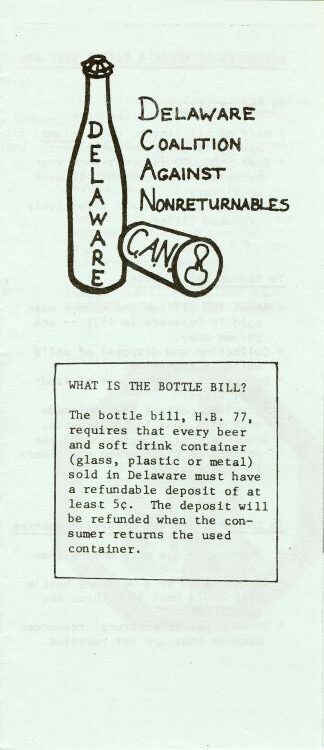
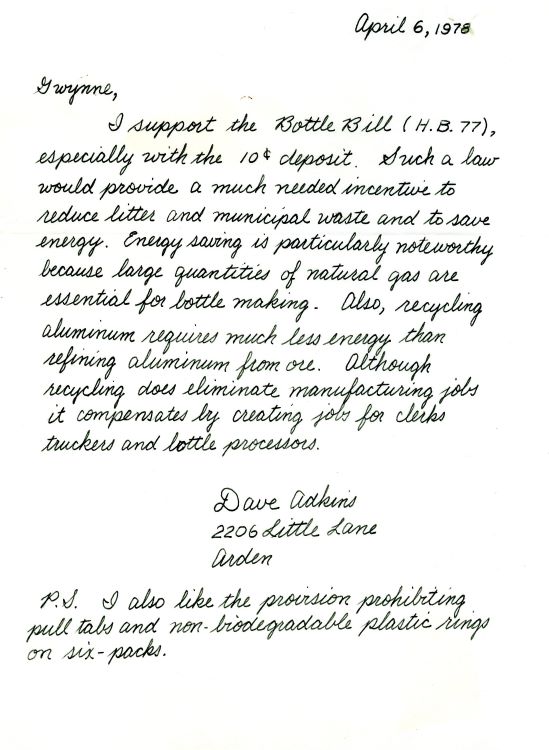
Gwynne P. Smith (1924-2010) was a committed environmental activist who served in the Delaware General Assembly from 1974 to 1990. Raised in a family that did a lot of camping, fishing, and hiking, Smith developed a life-long passion for the environment and, as a community activist and politician, advocated for legislation related to clean air, water resources, coastal protections, recycling, and land use. In the 1970s, Smith became particularly interested in the environmental impact of littering and collected this aluminum can top and six-pack ring as a symbol of the harmful effects of non-recyclable bottles. As states including Vermont and Oregon added deposits on beverage containers to encourage recycling, Smith successfully campaigned for a “Bottle Bill” establishing a 5-cent refundable bottle deposit in Delaware. Notably, the deposit return system was in place from 1982 to 2009 and was replaced in 2010 by a 4-cent recycling fee.