
Below are a variety of items belonging to men who served in Union Army during the American Civil War. Many of these items were sent home to the soldiers' loved ones, and in some cases, became memorials to those lost.
Virtuti Militari Medal, circa 1830 and Civil War swords, circa 1860s
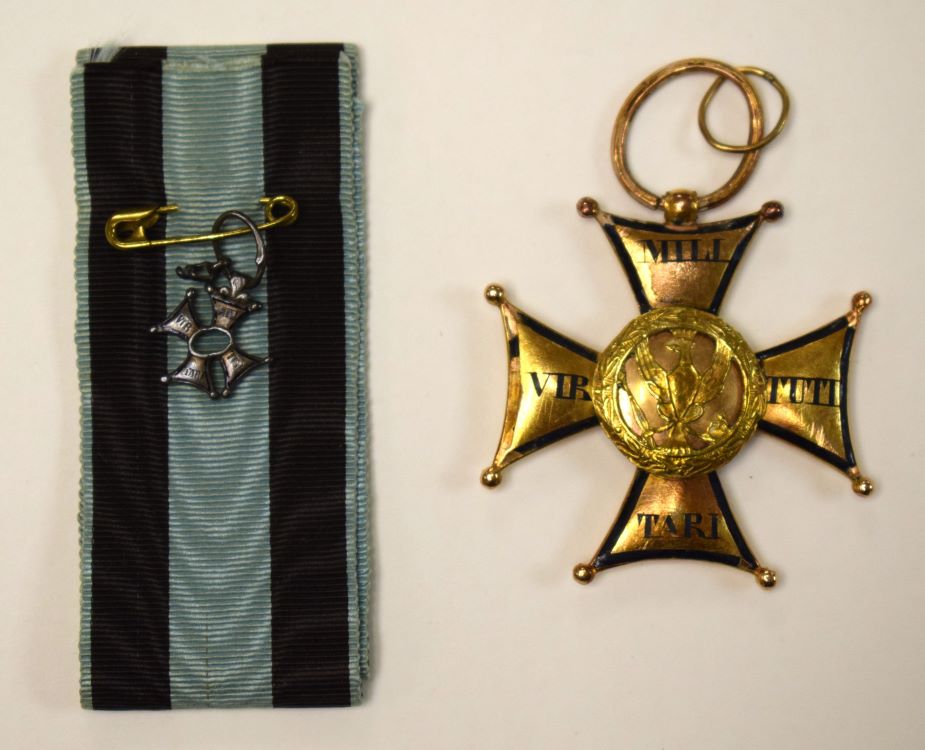
This Virtuti Militari – Poland’s highest military decoration for heroism and courage in battle – was awarded to Alexander Raszewski (1806-1880) for his service in the cavalry during the Polish rebellion against Russia (1830-1831). After the failed rebellion he fled to France, where he fought in the French Revolution of 1848. In 1850 he immigrated to the United States. During the American Civil War, Raszewski organized a Polish Legion of volunteers for the Union Army and served as a Major. He continued to wear his Virtuti Militari medal while fighting for the Union, and kept it on his person throughout the war.
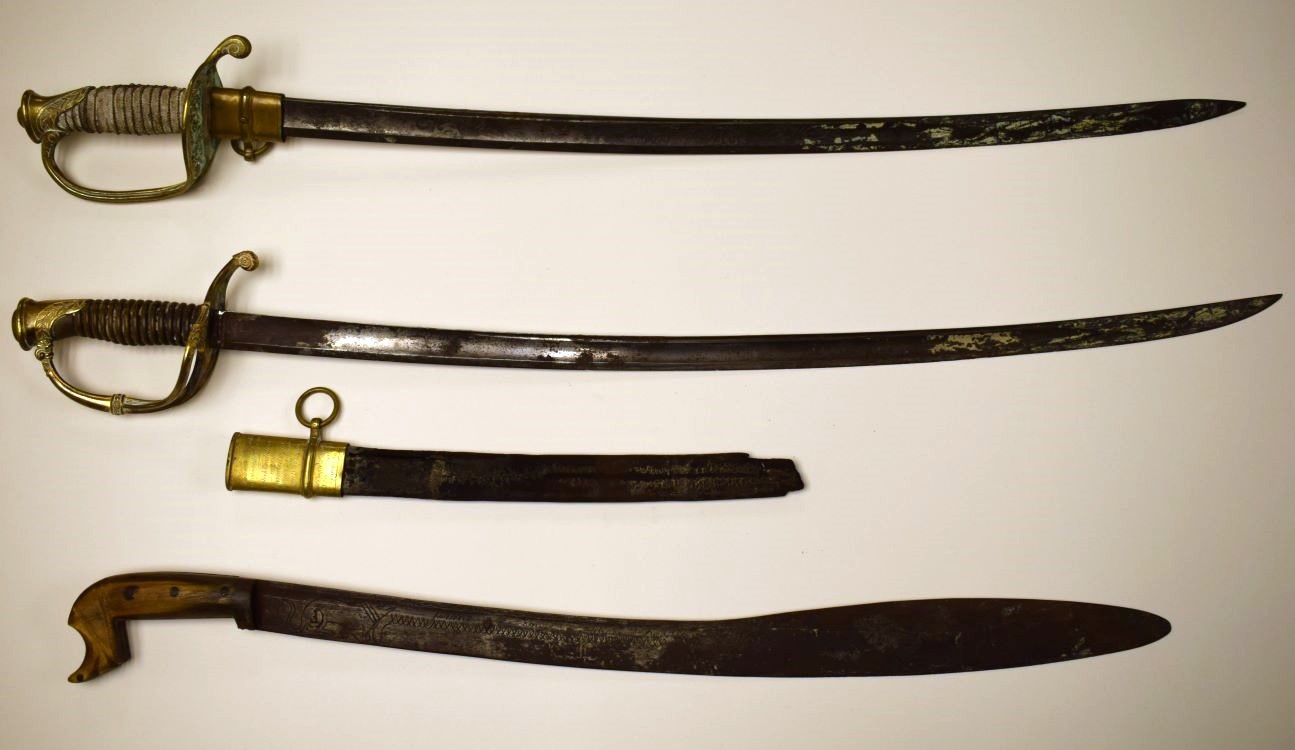
Two of the swords on display were used by Raszewski during the Civil War. As an officer, he would have been expected to supply his own equipment. The first of these swords [top], a US Model 1850 produced circa 1860s by Minzer in Philadelphia, is probably the one that he purchased. The second sword [middle], a US Model 1860 from 1861, was presented to Raszewski by the troops under his command, just a few months after he was commissioned as a captain. The third sword [bottom] is a Confederate sword (circa 1860s), which Raszewski captured at some point during the war.
Raszewski resigned his commission due to allegations that he had been passed up for a promotion in favor of a less experienced officer. In his retirement, Raszewski devoted himself to painting and gardening. All of these artifacts remained with his descendants until 2020, when they were donated to the University by Raszewski’s great-granddaughter, Gabrielle Griswold.
Fragment of an American Flag, circa 1860s
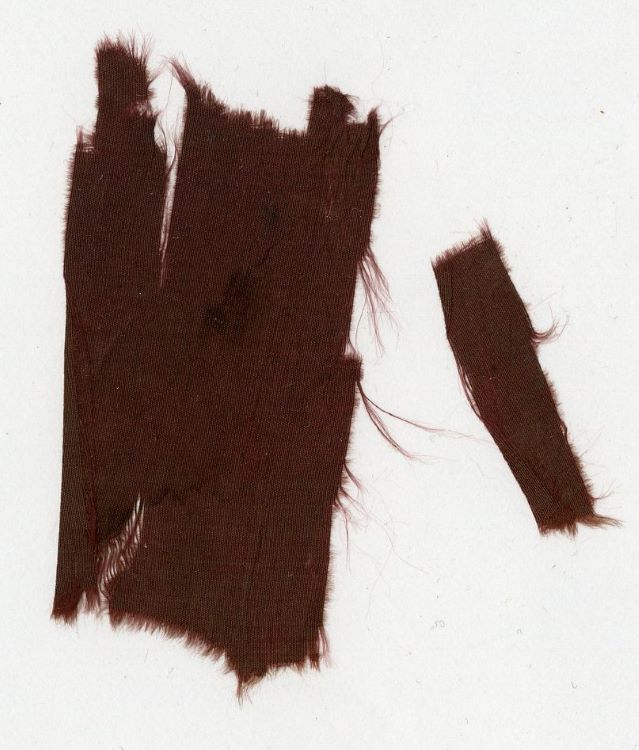
This fragment of an American flag was mailed by David N. Lilley (1842-1887), a Union Army soldier in the American Civil War, to his sister, Annie Lilley. Writing to his sister, David Lilley said “I inclose [sic] a bit of our dear old flag. Keep it to remember the 2nd Delaware.”
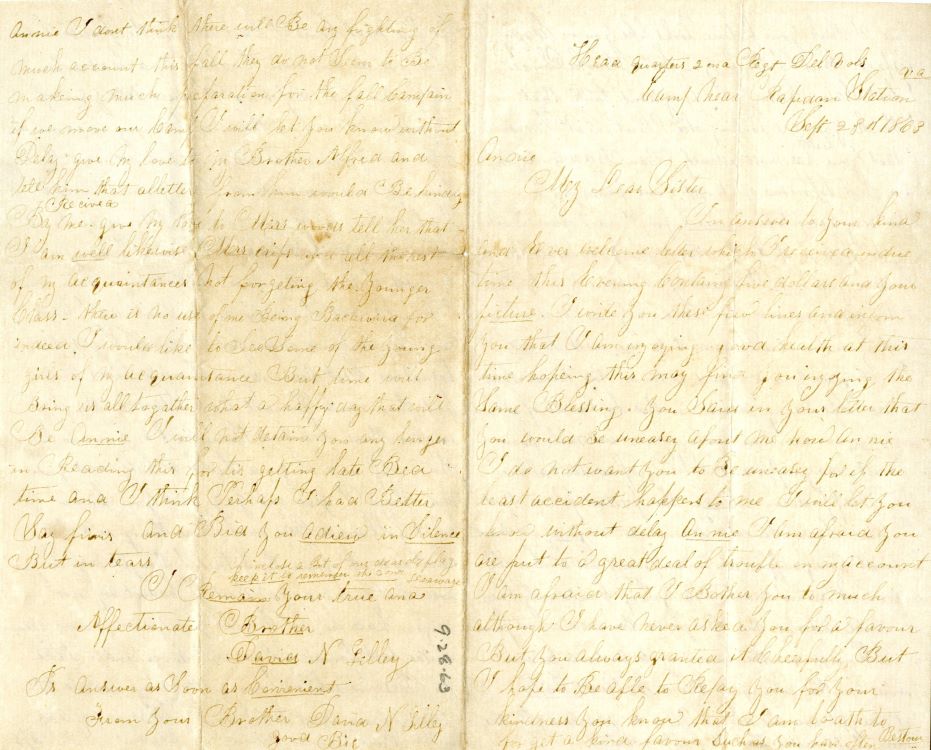
Born in Cecil County, Maryland, Lilley’s family moved near Newark, Delaware when he was young, and he remained there for most of his life. In 1861, at the age of 19, Lilley enlisted in the Union Army. During the war he fought at the Battles of Fair Oaks (1862) and Chancellorsville (1863). His unit also was visited by Abraham Lincoln, an incident which Lilley described in one of the letters he sent home. In the letter that accompanied this flag fragment, Lilley said that he was encamped in the woods near the Rapidan River, which he said was “the prettiest place that I have saw since I came into Virginia.”
Lilley returned to Newark after the war. He died in 1887 from lockjaw and blood poisoning, following a railroad accident. David N. Lilley’s letters remained with the Lilley family until 1969, when they were donated to Special Collections by Thomas Lilley.
Piece of Coconut Bark, circa 1862-1864
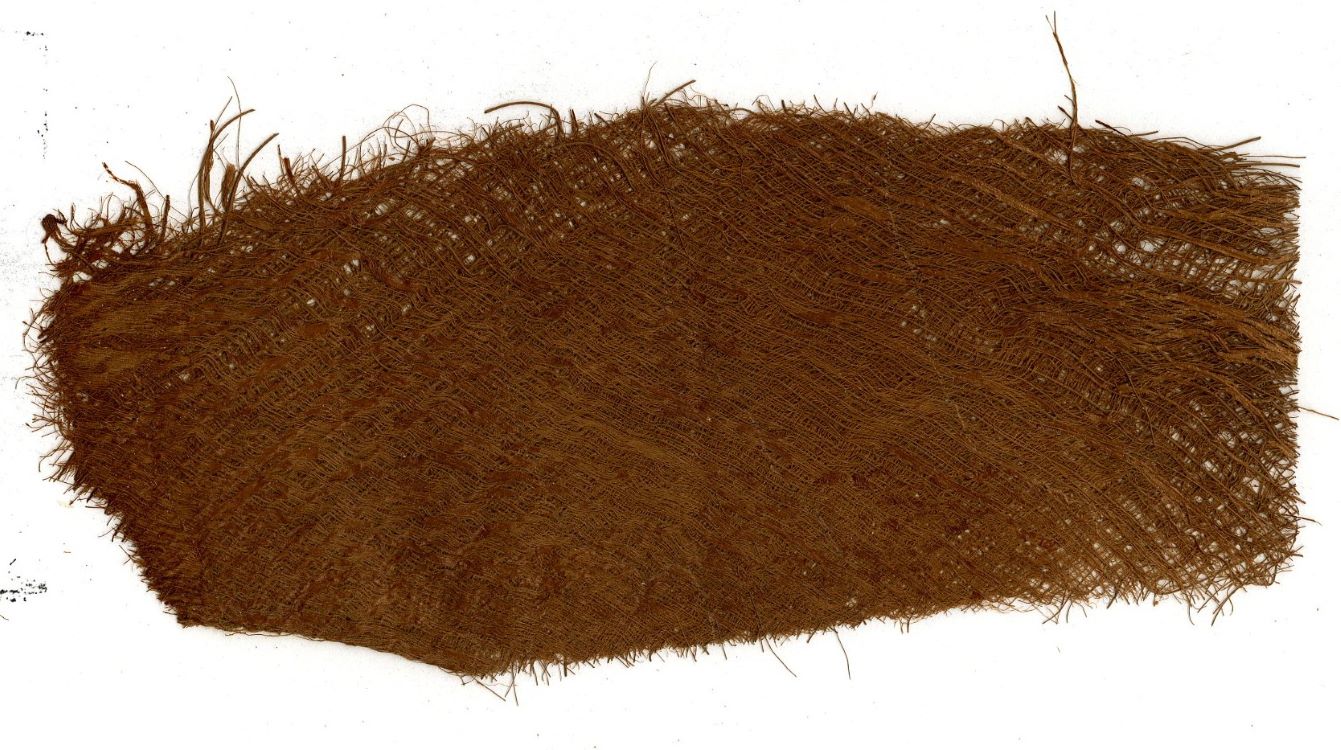
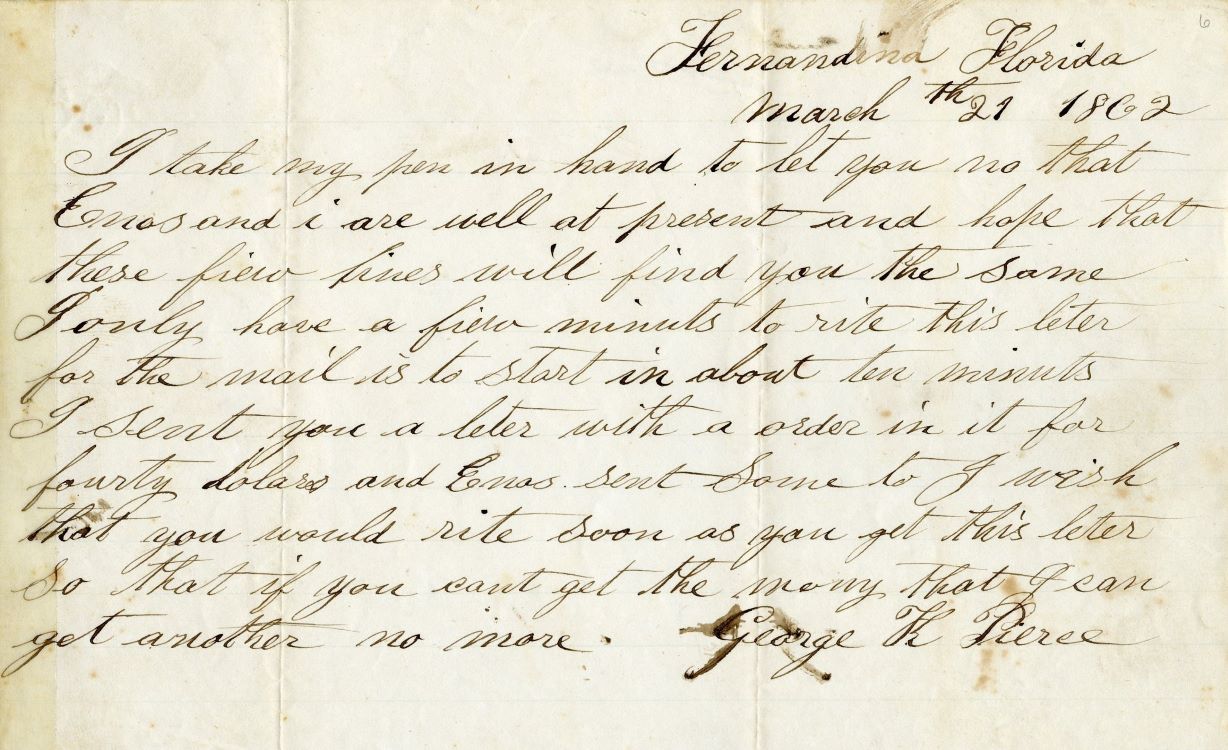
This piece of coconut bark was mailed home by either George (1838-1864) or Enos Pierce (1840-1864), two brothers who served in the Union Army during the American Civil War. Their family did not keep a record of when the fragment was mailed home, but it was saved alongside the letters that the Pierce brothers wrote to their parents and siblings, all of which remained with the Pierce family until the 1950s.
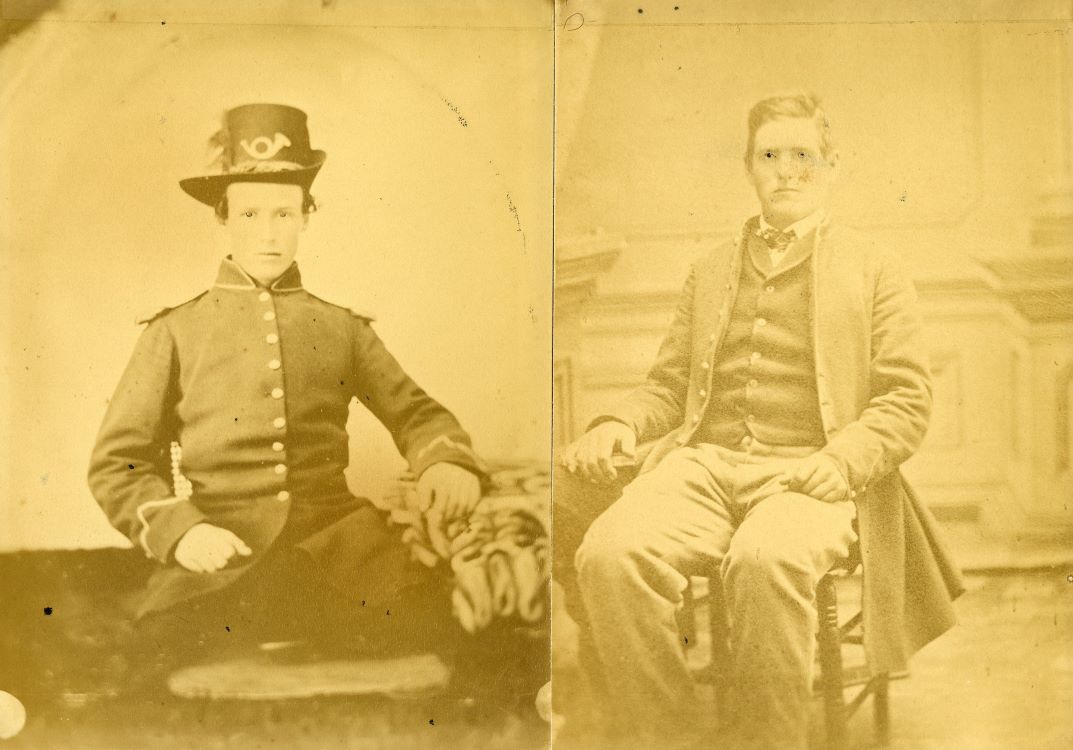
Prior to the Civil War, the Pierce brothers lived and worked on their family farm in Brandywine Hundred in northeastern Delaware. After joining the 97th Regiment of the Pennsylvania Volunteers, they were stationed in areas of Florida, South Carolina, and Virginia. They fought in battles at Fort Wagner (South Carolina), James Island (South Carolina), Charleston (South Carolina), and Bermuda Hundred (Virginia).
Both brothers were killed in the war. In his final letters, George described his efforts to find his brother, who went missing following a disastrous picket charge at Bermuda Hundred on May 23, 1864. Enos was presumed dead; his body was never found. George was wounded by a sharpshooter in Virginia on July 26 of the same year, and died of his wounds only days later.